

Schauen wir uns das Wort einmal genau an: Marktplatz. Darin steckt eine Wahrheit, die seit tausenden Jahren gilt — MARKT und PLATZ. So hat Handel immer funktioniert: Jemand hat etwas anzubieten, jemand anderes sucht etwas, und beide treffen sich an einem Ort, an dem getauscht wird. Der Platz ist die Bühne, der Markt ist die Bewegung darauf. Beides gehört zusammen, und beides erfordert aktives Zutun.
Genau dieses Bewusstsein ist im modernen Online-Handel in den Automodus gegangen. Viele Verkäufer und auch Händler glauben heute: „Ich habe inseriert, damit ist alles getan — ich warte." Das kann nur in eine Sackgasse führen. Ein Marktplatz funktioniert nur, wenn man ihn als das versteht, was er ist: ein Ort, der gefüllt, belebt und immer wieder neu betreten werden muss.
Die natürliche Konkurrenz unter Marktplätzen
Caravan-Marktplätze konkurrieren untereinander — das liegt in der Natur der Sache. Es ist keine Frage, wer der stärkste Anbieter ist, sondern eine Frage des Multiplikationsfaktors. Sobald Sie zehn ähnliche Wohnwagen nebeneinander stellen, entsteht ein natürliches Dilemma der Wahlfreiheit. Der Käufer wird nicht effizienter, je mehr er sieht — im Gegenteil, er wird unsicherer.
Stellen Sie sich die andere Seite vor: Sie sind Händler und müssen am Freitagmittag fünfzig Inserate einstellen, am besten gleich auf mehreren Portalen parallel. Wer das schon einmal gemacht hat, weiß: Spätestens beim zwanzigsten Inserat sinkt die Sorgfalt, die Bilder werden austauschbarer, die Beschreibungen kürzer. Genau hier entsteht das eigentliche Problem — nicht in der Reichweite, sondern in der Qualität.
Reichweite ist nicht alles
Große Portale und kleinere Plattformen wie CARAVANDRIVE konkurrieren in der reinen Reichweite gar nicht. Zehntausende Wohnwagen gegen ein paar hundert — das ist kein Vergleich, und das soll es auch nicht sein. Quantität ist hier nicht mehr das entscheidende Kriterium, weil sie zu eindeutig ist.
Was kleinere Portale sehr wohl können: technisch raffinierter aufgebaut sein. Mit dem Aufkommen leistungsfähiger KI-Werkzeuge hat sich diese Möglichkeit deutlich verstärkt. Starke Systemdenker können heute Funktionslogiken entwickeln, die einem festgefahrenen Portal, das seit dreißig Jahren nach demselben Schema arbeitet, in vielen Aspekten überlegen sind. Nicht in der Masse — aber in der Präzision.
Große Portale verbrennen dabei enorme Kosten. Entwicklerteams, Marketing-Experten, Kampagnen, permanente Funktionserweiterungen — all das kostet Geld, oft im sechsstelligen Bereich pro Monat. Eine individuelle Lösung wie CARAVANDRIVE kann mit anderen Mustern punkten: kleinere Auflagen, dafür konkretere Steuerung. Weniger Lärm, mehr Substanz.
Was Verkäufer selbst tun können — das Exposé
Was kann ein Verkäufer also tun, um aus dem „Ich-warte-und-werde-schon-gefunden"-Modus auszusteigen? Sehr viel mehr, als die meisten denken. Ein einfaches, aber unterschätztes Werkzeug ist das Exposé.
Aus der Immobilienwelt kennen wir das Prinzip längst: ein gut gestaltetes DIN-A4-Blatt mit Foto, technischen Eckdaten und QR-Code. Jeder handelsübliche Drucker hat das in fünf Minuten hundertfach ausgegeben. Und dann beginnt die eigentliche Arbeit — die analoge Verbreitung:
Bei CARAVANDRIVE können Sie für jedes Inserat ein professionelles Exposé als PDF herunterladen — mit Foto, QR-Code und allen technischen Daten. Das ist Marktarbeit im klassischen Sinne. Es kostet kaum Geld, aber es kostet das, was viele heute scheuen: ein bisschen Zeit und persönliche Initiative.
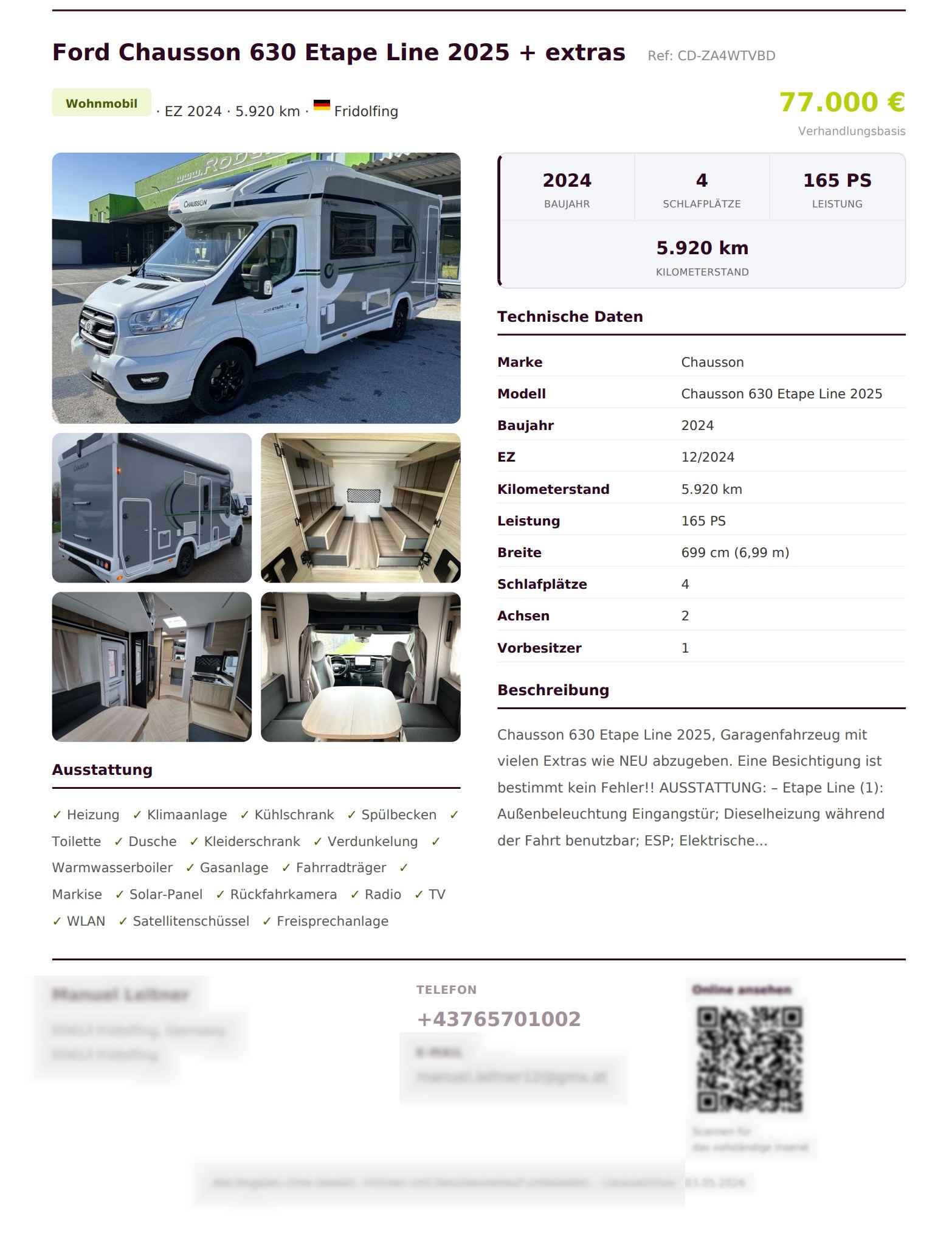
Beispiel: Professionelles Fahrzeug-Exposé — mit QR-Code, Foto und allen Eckdaten
Die ideale Kombination
Wenn ein Portal zwei Dinge gleichzeitig liefert — Funktionalität auf dem Niveau der Großen und konkrete Hilfsmittel für die persönliche Vermarktung — dann bewegt sich diese Plattform sehr nahe an der Realität des Verkaufens. Es geht nicht darum, das größte Schaufenster zu haben. Es geht darum, dass das eigene Inserat sichtbar wird, dort, wo es zählt.
Die unbequeme Wahrheit
Die harte, aber faire Feststellung lautet: Ein Portal ist ein Helfer, kein Verkaufsautomat. Es tätigt keine Abschlüsse. Ein Wohnwagen ist ein kostenintensives Objekt, und ein Verkauf muss marktfähig sein — das heißt, er muss sich am echten Markt beweisen.
Alle Portalbetreiber wissen das, oder sollten es wissen. Händler wissen es ebenfalls, aber im Tagesgeschäft setzen Mitarbeiter es nicht immer konsequent um. Inserieren ist ein Geduldspiel. Viele Verkäufer überkommt nach dem Hochladen ein Gefühl der Erleichterung — „erledigt." Doch das allein reicht selten aus, gerade in der Hochsaison wie den Ferienzeiten, in denen der Markt riesig wird und die Aufmerksamkeit knapp.